
Correct Posture While You Sleep
As the saying goes, "Medicine is inferior to food nourishment, and food nourishment is inferior to sleep nourishment." Sleep is the body's most powerful way to heal itself and consolidate its vital energy. The ancient wellness lying practices passed down through generations can regulate blood circulation and harmonize the body's organ systems through simple sleeping posture adjustments — no strenuous exercise required. Just lie down for a few minutes before bed and let your body restore itself.
Among these practices, three lying postures stand out as the most classic: the Auspicious Pose, the Yang-Restoring Pose, and the Primordial Unity Pose. Each targets specific wellness goals — calming the mind for deep sleep, warming the kidneys to replenish yang energy, and harmonizing qi and blood throughout the entire body. They are suitable for different constitutions and sleep concerns, and even beginners can practice them with ease.
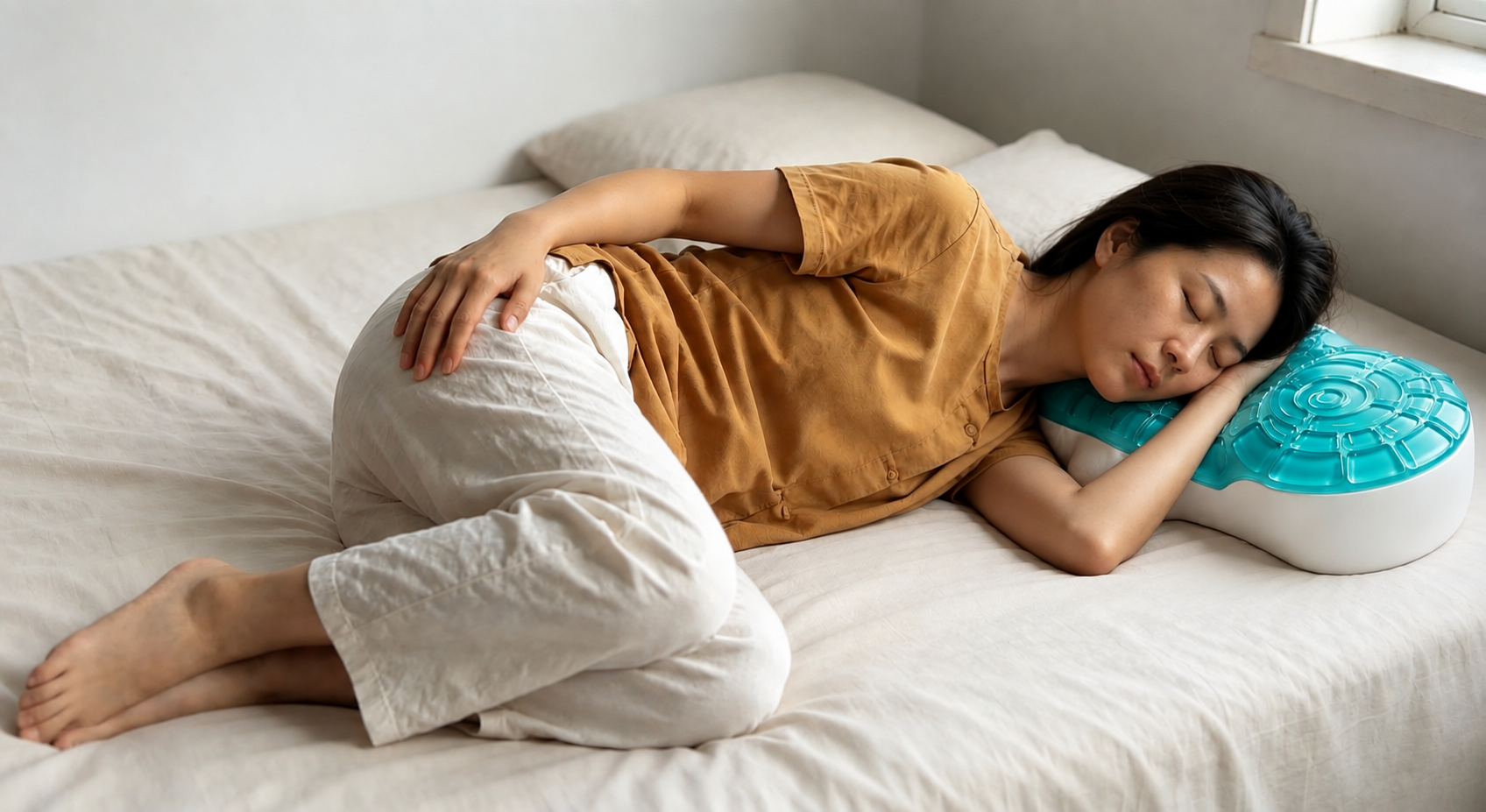
The Auspicious Pose originates from traditional Buddhist wellness practices and is widely recognized as the optimal sleeping posture for restful sleep. It is also the standard form described in ancient texts as "lying like a bow." Its primary functions are to nourish the heart, calm the mind, and consolidate the spirit — specifically addressing problems such as excessive dreaming, frequent waking, mental restlessness, and light sleep.
Lie naturally on your right side, with your torso relaxed and not twisted. Keep your right leg naturally straight, while your left leg bends slightly at the knee and rests gently on top of your right leg. Place your right palm against your face, with the thumb gently pressing behind the earlobe, supporting the right side of your head with a light touch. Let your left hand relax naturally, resting lightly on your left thigh or hip. Keep your entire body relaxed, breathe naturally, and allow your body to form a gentle bow shape.
From a Traditional Chinese Medicine perspective, the human body follows the principle of "left governs blood, right governs qi." Since the heart is located on the left side of the chest, lying on the right side elevates the heart's position, reducing compression on the chest cavity, allowing for smoother breathing and minimal cardiac strain. At the same time, this posture guides blood and qi to return to the liver, supporting the liver's function of storing blood and housing the spirit, which calms an agitated mind. Regular practice can significantly improve difficulty falling asleep, midnight waking, and chaotic dreaming. With consistent practice, sleep quality improves dramatically, leaving you feeling refreshed and energized upon waking.
People with insomnia and excessive dreaming, mental anxiety, racing thoughts before bed, fatigue from late nights, weak spleen and stomach, or heart palpitations and shortness of breath.
Do not deliberately tense your body — the entire practice should prioritize relaxation and comfort. Those accustomed to sleeping on their left side or stomach can adjust gradually without forcing the posture.
Note: For those accustomed to left-side or stomach sleeping, adjust gradually without forcing the position. When supporting the head with the right hand, keep the pressure gentle to avoid compressing the nerves behind the ear.
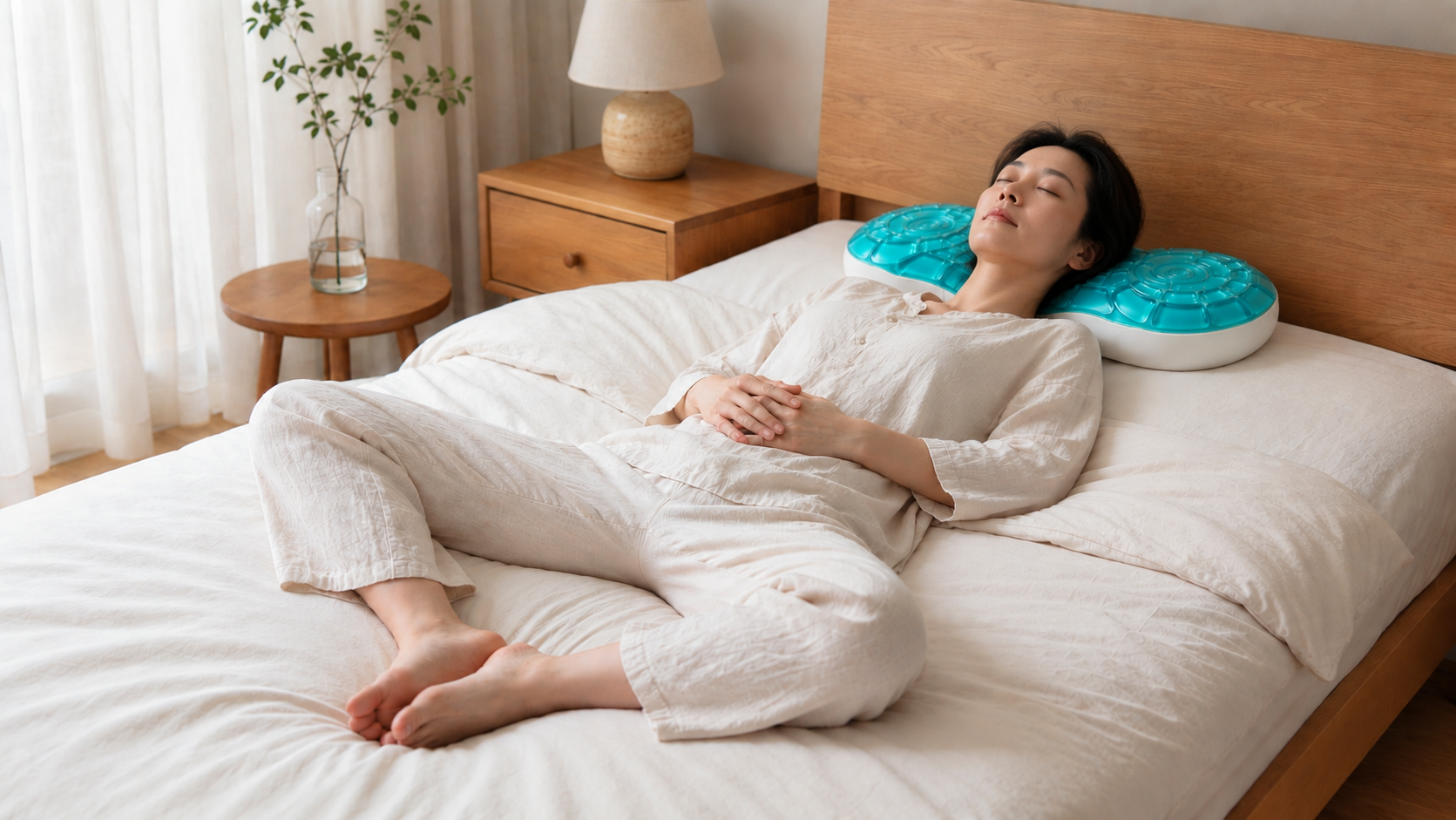
The Yang-Restoring Pose is a classic Daoist "sleeping immortal" practice, known as "lying down to replenish the true fire of the Mingmen (Gate of Life)." Its core function is to generate kidney yang, warm and unblock the lower burner, and dispel cold and dampness — specifically addressing the yang deficiency and qi deficiency caused by modern sedentary lifestyles, late nights, and cold exposure.
Lie flat on your back, with your lower back naturally pressed against the bed surface and your entire body relaxed. Bend both knees naturally and open them outward, with the soles of your feet fully touching each other, heels as close to the perineum as comfortable (do not force the stretch — comfort is key). Place both hands palms-down, overlapping gently on your lower abdomen at the Dantian (elixir field) position. Close your eyes and lie quietly, maintaining even, long, and gentle abdominal breathing.
When the Yongquan acupoints (KI1) on the soles of both feet face each other, they form a closed circuit of qi and blood, locking in the body's yang energy and preventing vital energy from leaking outward. The outward opening of the legs stretches the hip meridians, unblocks qi and blood in the lower burner, and awakens kidney yang energy. Regular practice can warm and tonify kidney yang, warm the uterus to dispel cold, and drain dampness and toxins. It improves symptoms of yang deficiency such as cold hands and feet, soreness and weakness in the lower back and knees, cold uterus and body, low energy, and morning fatigue — quickly restoring the body's vital energy.
People with cold hands and feet, sensitivity to cold, kidney qi deficiency, lower back and knee soreness, sedentary lifestyle with heavy dampness, cold uterus and menstrual pain, or yang depletion from late nights.
Beginners with stiff hip joints should not force their knees to touch the bed — stretch gradually. Practice for 10–20 minutes before bed each time; once asleep, the posture can relax naturally and does not need to be maintained all night. Those with yin deficiency and excessive internal heat (easily prone to "fire" symptoms) should not practice for extended periods.
Note: Those with stiff hip joints should not force their knees to the bed — stretch gradually. Those with yin deficiency, excessive internal heat, or dry mouth should not practice for extended periods. Contraindicated for pregnant women.
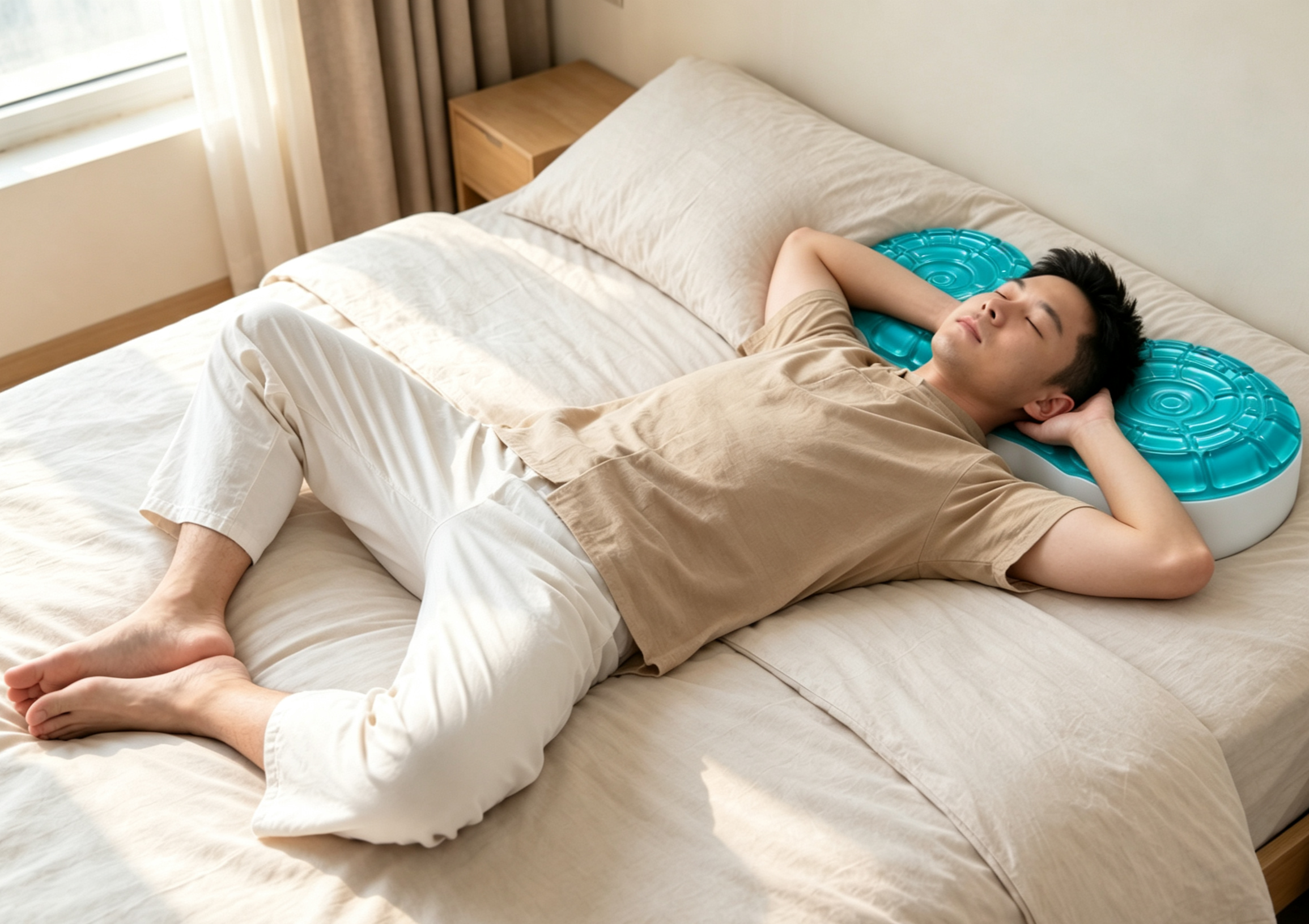
The Primordial Unity Pose is the advanced version of the Yang-Restoring Pose, combining yang supplementation, mind calming, and qi-blood harmonization. It focuses on heart-kidney interaction and returning the entire body to its primordial unity. Compared to the Yang-Restoring Pose, it places greater emphasis on harmonizing the upper and lower qi mechanisms, making it suitable for people with bodily deficiency, poor qi and blood circulation, anxiety, and insomnia — with more comprehensive wellness effects.
The lower body posture is identical to the Yang-Restoring Pose: lie flat, soles of feet touching, knees open outward. The upper body posture is upgraded: cross or overlap both hands, placing them gently above the Baihui acupoint (GV20) at the crown of the head, with palms facing directly toward Baihui. Keep both arms naturally relaxed, forming a closed-loop shape that gathers energy at the top of the head and connects it to the feet below. Lie quietly and regulate your breath.
The lower body gathers kidney qi and warms and consolidates lower burner yang energy, while the upper body receives the clear yang energy from the crown of the head — allowing heart fire to descend and kidney water to ascend, achieving the core Traditional Chinese Medicine wellness goal of "heart-kidney interaction." This posture both supplements kidney yang and dispels cold-dampness, while also unblocking head meridians, soothing the nerves, and calming anxiety. It opens up qi and blood circulation throughout the entire body, improving problems such as qi and blood deficiency, dizziness and fatigue, light and easily disturbed sleep, and physical and mental exhaustion — balancing yin and yang throughout the body.
People with dual deficiency of qi and blood, yin-yang imbalance, excessive worry and thinking, anxiety and irritability, stubborn light sleep, lower back stiffness, or bodily deficiency and fatigue.
For those with hypertension, keep hand pressure extremely gentle during practice to avoid compressing the head. Maintain relaxation throughout — do not hold your breath or tense your body. Practice quietly before bed; there is no need to deliberately maintain the posture for extended periods.
Note: For those with hypertension, keep hand pressure extremely gentle to avoid compressing the head. Those with neck discomfort may place a thin pillow under their hands to reduce the strain of unsupported arms.
Auspicious Pose: Right-side lying, focusing on nourishing the heart and calming the mind, improving insomnia and excessive dreaming — suitable for those with mental restlessness and poor sleep.
Yang-Restoring Pose: Lying on the back with soles touching, focusing on warming and tonifying kidney yang, dispelling cold and dampness — suitable for those with yang deficiency, cold body, and low energy.
Primordial Unity Pose: Yang-Restoring Pose plus hands over the crown of the head, focusing on heart-kidney interaction and harmonizing qi and blood — suitable for those with bodily deficiency, anxiety, and yin-yang imbalance.
The core of ancient lying wellness practices lies not in achieving perfect posture, but in relaxation, mental calm, and consistency. There is no need to set aside dedicated exercise time — simply choose the posture that suits you, lie quietly for ten to fifteen minutes before bed each night, follow your body's natural rhythms, and gradually you will sleep your way to better complexion and restored vitality.
The core of lying wellness practice lies in relaxation and mental calm. Do not deliberately tense your body or force a fixed posture — your own comfort is the first principle.
Beginners should not practice for too long initially. Start with 5–10 minutes, and as you adapt, gradually extend to 15–20 minutes. Once asleep, your posture can relax naturally — there is no need to maintain it all night.
Avoid practicing immediately after a full meal, as this may interfere with digestion. Practicing 1 hour before bed yields the best results.
Choose a quiet, warm, and well-ventilated environment. Avoid direct airflow from air conditioners or fans, and keep your shoulders, neck, waist, and abdomen warm.
Maintain even, long, and natural breathing throughout. Do not hold your breath, deliberately control your breathing, or pursue special bodily sensations.
If you experience dizziness, heart palpitations, chest tightness, numbness in the limbs, or any other discomfort during practice, stop immediately and return to a normal resting position.